
Korean Shopping Phrases — 쇼핑 표현
Read the lesson, then practise at your own pace. All explanations and examples are on this page.
Shopping Vocabulary 쇼핑 단어
Shopping in Korea (쇼핑)
Korea has a rich shopping culture — from traditional outdoor markets (시장) to high-end department stores (백화점) to 24-hour convenience stores (편의점) on every corner. Bargaining is normal at traditional markets but not at chain stores or malls. Learning to ask prices, compare items, and complete transactions in Korean will make your shopping experience much smoother and more personal. The key question you'll use constantly is 얼마예요? (How much is it?)
Words and phrases
AI-generated learning illustration
| Korean | Pronunciation | Meaning |
|---|---|---|
| 가게 | ga-ge | store / shop |
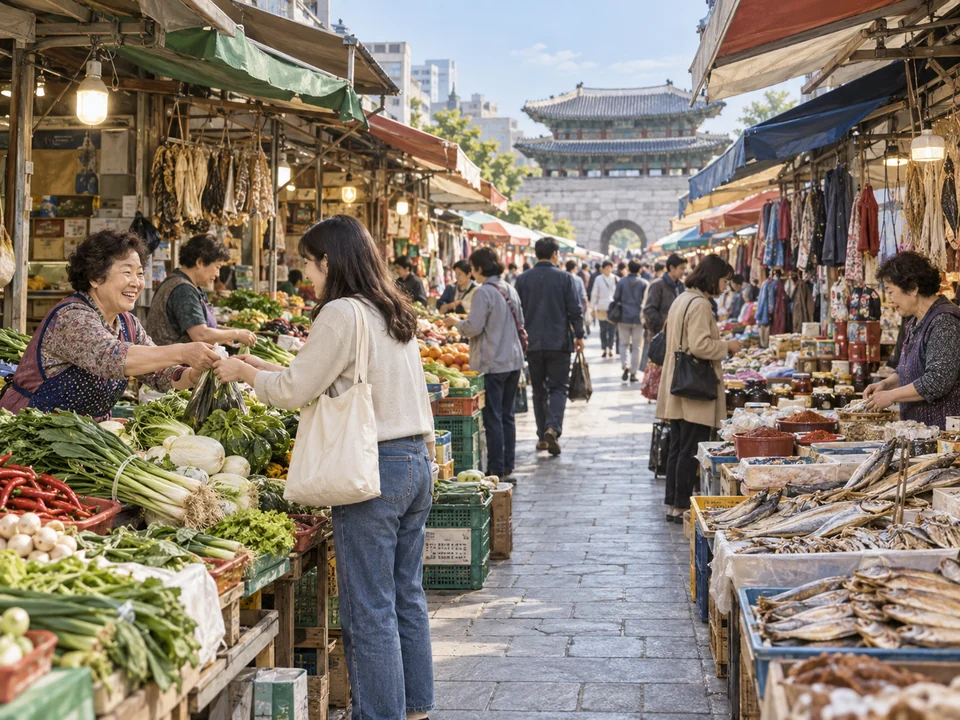 시장 시장 | si-jang | market (traditional outdoor) |
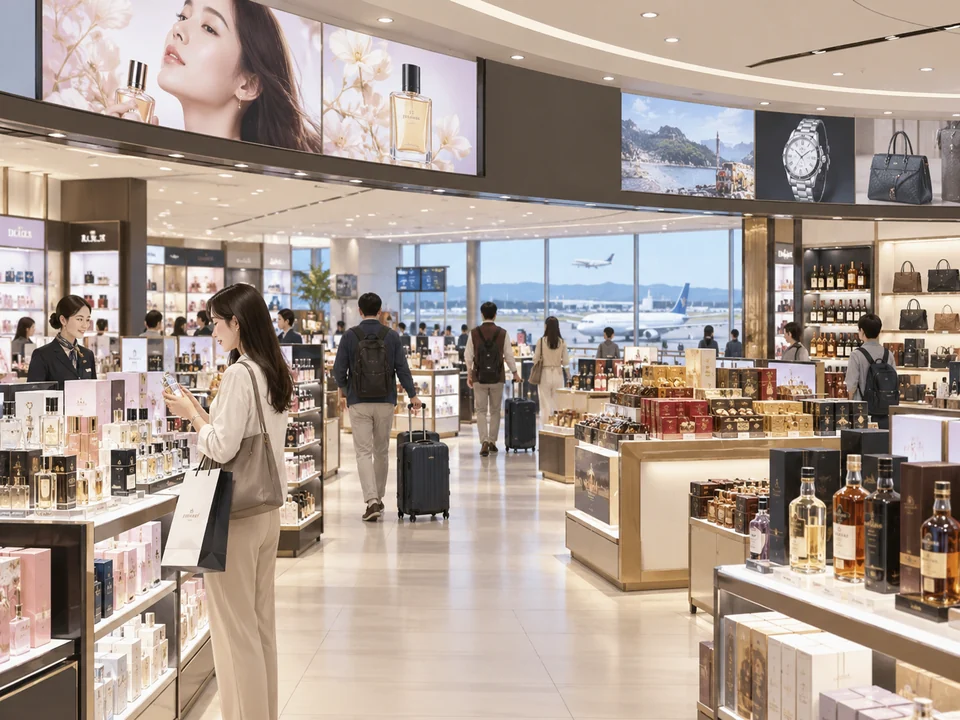 백화점 백화점 | baek-hwa-jeom | department store |
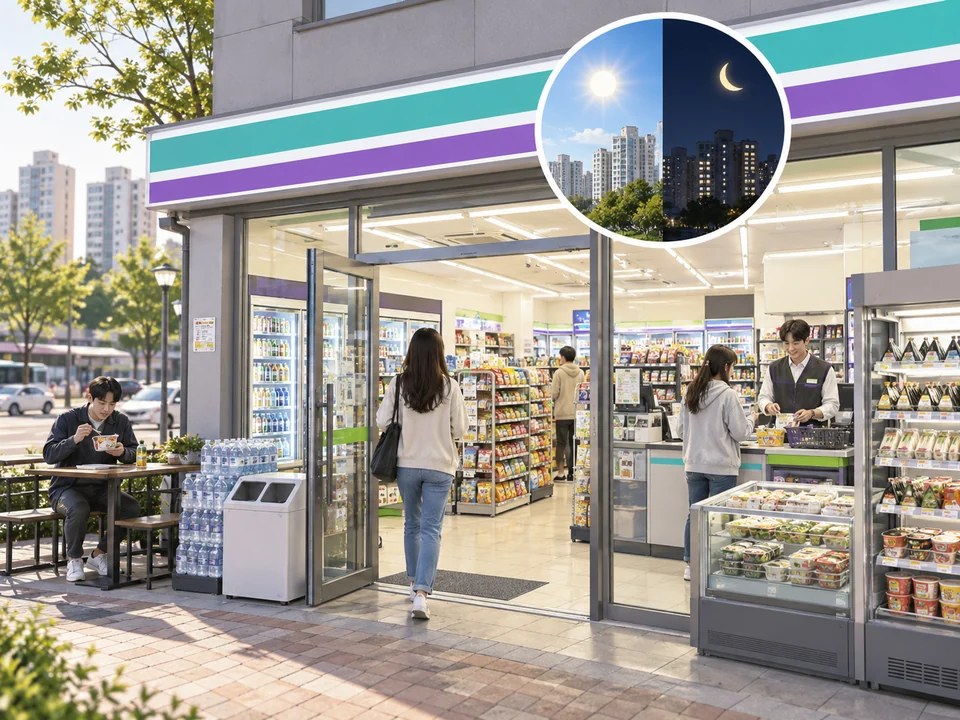 편의점 편의점 | pyeon-ui-jeom | convenience store |
Check your understanding
Shopping Item Words (쇼핑 물건)
Korean uses many loanwords for modern products — 핸드폰 (cell phone), 노트북 (laptop), 티셔츠 (T-shirt). Native Korean and Sino-Korean words cover traditional items: 옷 (clothes), 신발 (shoes), 가방 (bag). When shopping, you'll often point to something and say 이거 (this one) — a simple and effective strategy. Korean has three of these pointing words: 이거 (this one, near you), 그거 (that one, near the person you are talking to) and 저거 (that one over there, away from you both). Sizes are often given in free-size (프리 사이즈), small (S), medium (M), and large (L/XL).
Words and phrases
| Korean | Pronunciation | Meaning |
|---|---|---|
| 옷 | ot | clothes / outfit |
| 신발 | sin-bal | shoes / footwear |
In the Store 가게에서
Key Shopping Phrases (쇼핑 표현)
A few essential phrases cover almost every shopping interaction. 얼마예요? (How much is it?) works for any price enquiry. 이거 주세요 (Please give me this) completes a purchase. 더 싸게 해 주세요 (Please make it cheaper) is used for bargaining at traditional markets. 있어요? (Do you have...?) + the item name asks if something is in stock. 없어요 means it's out of stock or unavailable.
Words and phrases
| Korean | Pronunciation | Meaning |
|---|---|---|
| 얼마예요 | eol-ma-ye-yo | How much is it? |
| 이거 주세요 | i-geo ju-se-yo | Please give me this / I'll take this |
| 더 싸게 해 주세요 | deo ssa-ge hae ju-se-yo | Please make it cheaper / Can you give me a discount? |
Check your understanding
Asking About Availability (있어요? / 없어요)
있어요? (Is there? / Do you have?) and 없어요 (There isn't / We don't have it) are two of the most useful words in Korean shopping. Attach an item before 있어요?: 이거 있어요? (Do you have this?), 더 큰 사이즈 있어요? (Do you have a bigger size?). 없어요 is the reply if it's sold out. You can also say 다 팔렸어요 (All sold out) in more detail.
Words and phrases
| Korean | Pronunciation | Meaning |
|---|---|---|
| 있어요 | iss-eo-yo | There is / I have / We have (polite) |
| 없어요 | eop-seo-yo | There isn't / We don't have it / Sold out |
Check your understanding
Prices & Numbers 가격·숫자
Korean Money & Prices (원) 원·가격
The Korean currency is the 원 (won, ₩). Prices can look large because 1,000 won ≈ 0.75 USD. A coffee might be 4,500원, a meal 8,000~12,000원. 비싸다 (expensive) and 싸다 (cheap) are the key opinion words. When you receive change, the amount back is 거스름돈. Prices at traditional markets are often negotiable — 깎아 주세요 (Please give me a discount) or 더 싸게요? (Can it be cheaper?) opens bargaining.
Words and phrases
| Korean | Pronunciation | Meaning |
|---|---|---|
| 원 | won | won — Korean currency (₩) |
| 비싸다 | bi-ssa-da | to be expensive |
| 싸다 | ssa-da | to be cheap / inexpensive |
| 할인 | ha-rin | discount / sale |
Check your understanding
Words and phrases
| Korean | Pronunciation | Meaning |
|---|---|---|
| 거스름돈 | geo-seu-reum-don | change (money returned after paying) |
Check your understanding
Transactions 거래·마무리
Payment Methods (결제 방법)
Korea is a highly cashless society — most places accept credit cards (신용카드) or debit cards (체크카드), and mobile payment via apps like KakaoPay and Samsung Pay is extremely common. Cash (현금) is still accepted everywhere but is used less often. When paying, you may be asked 카드요, 현금이요? (Card or cash?). Requesting a receipt is 영수증 주세요. Tax refund signs (Tax Refund) at stores mean you can claim VAT back at the airport as a tourist.
Words and phrases
| Korean | Pronunciation | Meaning |
|---|---|---|
| 카드로 할게요 | ka-deu-ro hal-ge-yo | I'll pay by card |
| 현금으로 드릴게요 | hyeon-geum-eu-ro deu-ril-ge-yo | I'll pay in cash (humble form) |
| 영수증 주세요 | yeong-su-jeung ju-se-yo | Please give me a receipt |
Check your understanding
Words and phrases
| Korean | Pronunciation | Meaning |
|---|---|---|
| 깎아 주세요 | kka-ka ju-se-yo | Please give me a discount / Please reduce the price |