
Common Korean Nouns — 명사
Read the lesson, then practise at your own pace. All explanations and examples are on this page.
People & Family 사람·가족
Korean Nouns (명사)
Korean nouns (명사) do not change based on gender or number. The same word 사람 means 'person', 'people', 'a person', and 'the person'. Plurality is understood from context or added separately with words like 들 (들 is a plural suffix, e.g. 사람들 = people). There are no articles like 'a' or 'the'. This makes Korean nouns very easy to learn — you just have to know the word itself.
Words and phrases
| Korean | Pronunciation | Meaning |
|---|---|---|
| 사람 | sa-ram | person / human |
| 남자 | nam-ja | man / boy |
| 여자 | yeo-ja | woman / girl |
| 아이 | a-i | child / kid |
| 친구 | chin-gu | friend |
Check your understanding
Family Nouns (가족 명사)
Korean family terms often differ depending on the speaker's gender. 오빠 (oppa) is what a female speaker calls her older brother, while 형 (hyung) is what a male speaker calls his older brother. Similarly, 언니 (unni) = older sister (female speaker) and 누나 (nuna) = older sister (male speaker). For parents, 아버지 / 어머니 are the formal terms, while 아빠 / 엄마 are the casual equivalents.
Words and phrases
| Korean | Pronunciation | Meaning |
|---|---|---|
| 아버지 | a-beo-ji | father (formal) |
| 어머니 | eo-meo-ni | mother (formal) |
Places & Time 장소·시간
Place Nouns (장소 명사)
Korean place nouns follow the same no-article rule as all other nouns. 학교 means 'school', 'a school', or 'the school' — context tells you which. When giving directions or stating location, Korean adds the particle 에 (at/in) after the place noun: 학교에 가요 (I go to school). Place nouns are among the most practical words to learn early.
Words and phrases
AI-generated learning illustration
| Korean | Pronunciation | Meaning |
|---|---|---|
| 집 | jip | house / home |
| 학교 | hak-gyo | school |
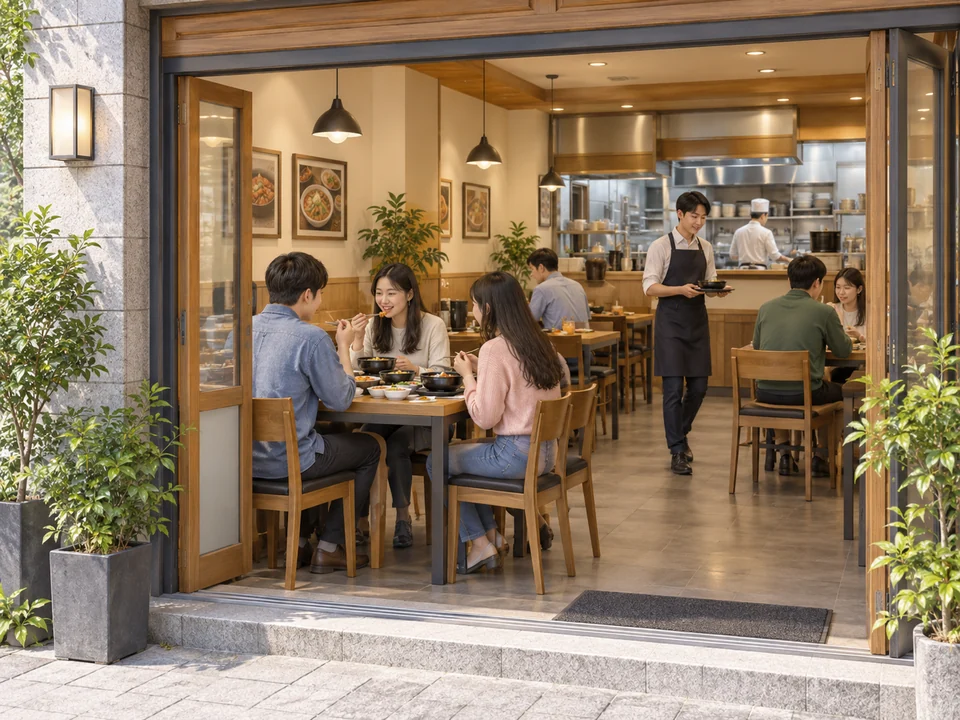 식당 식당 | sik-dang | restaurant / dining hall |
 병원 병원 | byeong-won | hospital / clinic |
Check your understanding
Time Nouns (시간 명사)
Time nouns in Korean work independently — no conjugation needed. You simply state the time word at the start of a sentence: 오늘 가요 (I'm going today), 내일 만나요 (Let's meet tomorrow). Korean time expressions use Sino-Korean numbers for hours and native Korean numbers for minutes. The most essential time words are 오늘 (today), 내일 (tomorrow), 어제 (yesterday), and 지금 (now).
Words and phrases
| Korean | Pronunciation | Meaning |
|---|---|---|
| 오늘 | o-neul | today |
Check your understanding
Objects & Counters 사물·수사
Object Nouns (사물 명사)
Everyday objects are among the most immediately useful Korean words. Korean has both native Korean words and Sino-Korean (Chinese-origin) words for objects, and in many cases Konglish (loan words from English) is used: 커피 (coffee), 핸드폰 (hand phone / cell phone). When the object is the direct receiver of a verb, add 을/를 after the noun: 책을 읽어요 (I read a book). This is the object-marking particle.
Words and phrases
| Korean | Pronunciation | Meaning |
|---|---|---|
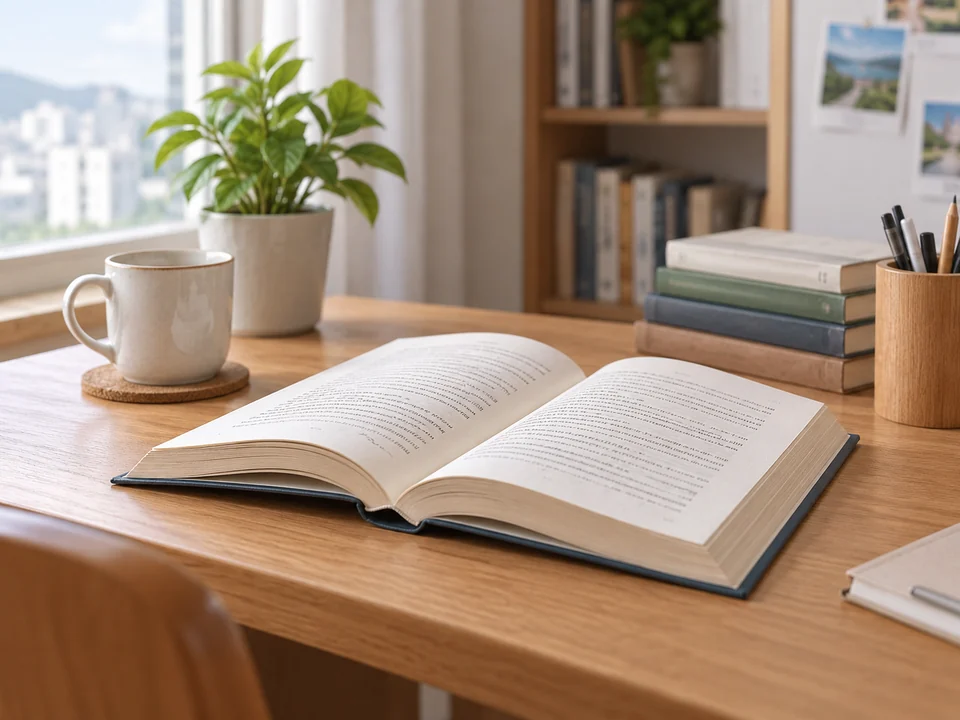 책 책 | chaek | book |
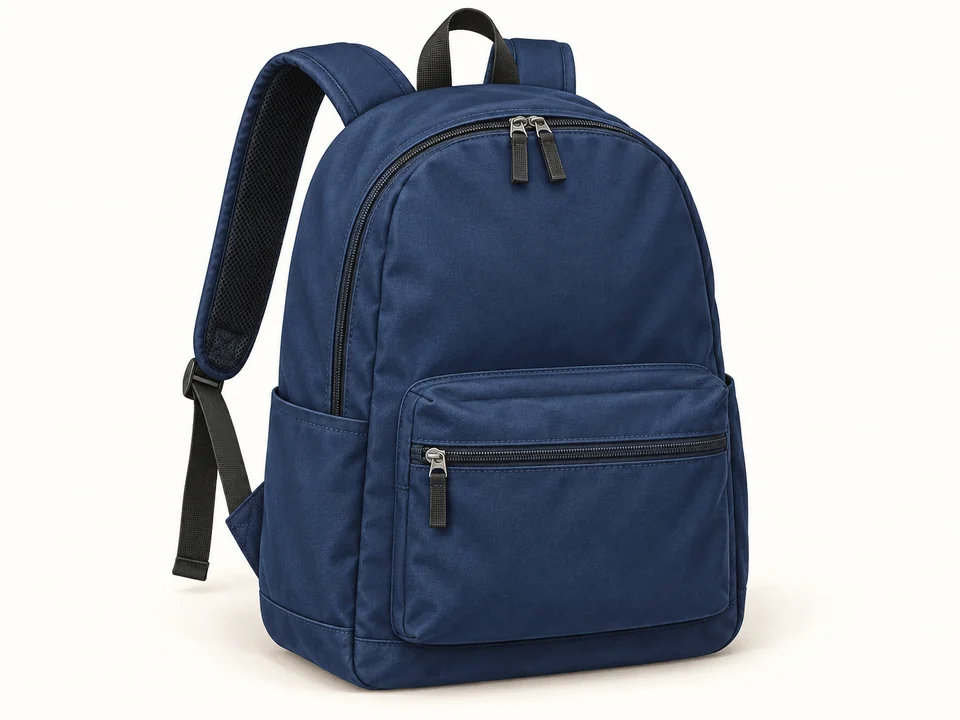 가방 가방 | ga-bang | bag / backpack |
| 돈 | don | money |
Check your understanding
Korean Counters (수사)
Korean uses counting words called counters (수사) that attach to numbers when counting specific things. The counter 개 is used for general objects: 한 개 (one thing), 세 개 (three things). 명 is used for counting people: 두 명 (two people). 잔 is used for cups/glasses: 한 잔 (one cup). The pattern is: number + counter, placed right before or after the noun. Korean numbers for counters use the native Korean set: 하나(1), 둘(2), 셋(3), 넷(4), 다섯(5).
Words and phrases
| Korean | Pronunciation | Meaning |
|---|---|---|
| 사람 세 명 | sa-ram se myeong | three people (명 = person counter) |
Check your understanding
Possessives 소유격·마무리
Possessive Marker 의 소유격 의
The possessive marker 의 (ui, often pronounced '에') attaches to a noun to show ownership, like English 's. 저의 가방 = my bag, 친구의 집 = friend's house. In everyday speech, 의 is commonly dropped: 제 가방 (my bag, polite) or 내 가방 (my bag, casual). The pronouns 저 and 나 have special possessive forms: 제 (polite, my) and 내 (casual, my).
Words and phrases
| Korean | Pronunciation | Meaning |
|---|---|---|
| 제 가방 | je ga-bang | my bag (polite) |
| 내 친구 | nae chin-gu | my friend (casual) |
Check your understanding
Words and phrases
| Korean | Pronunciation | Meaning |
|---|---|---|
| 친구의 집 | chin-gu-ui jip | friend's house |