
K-Pop Stars' Korean Phrases You Need to Know
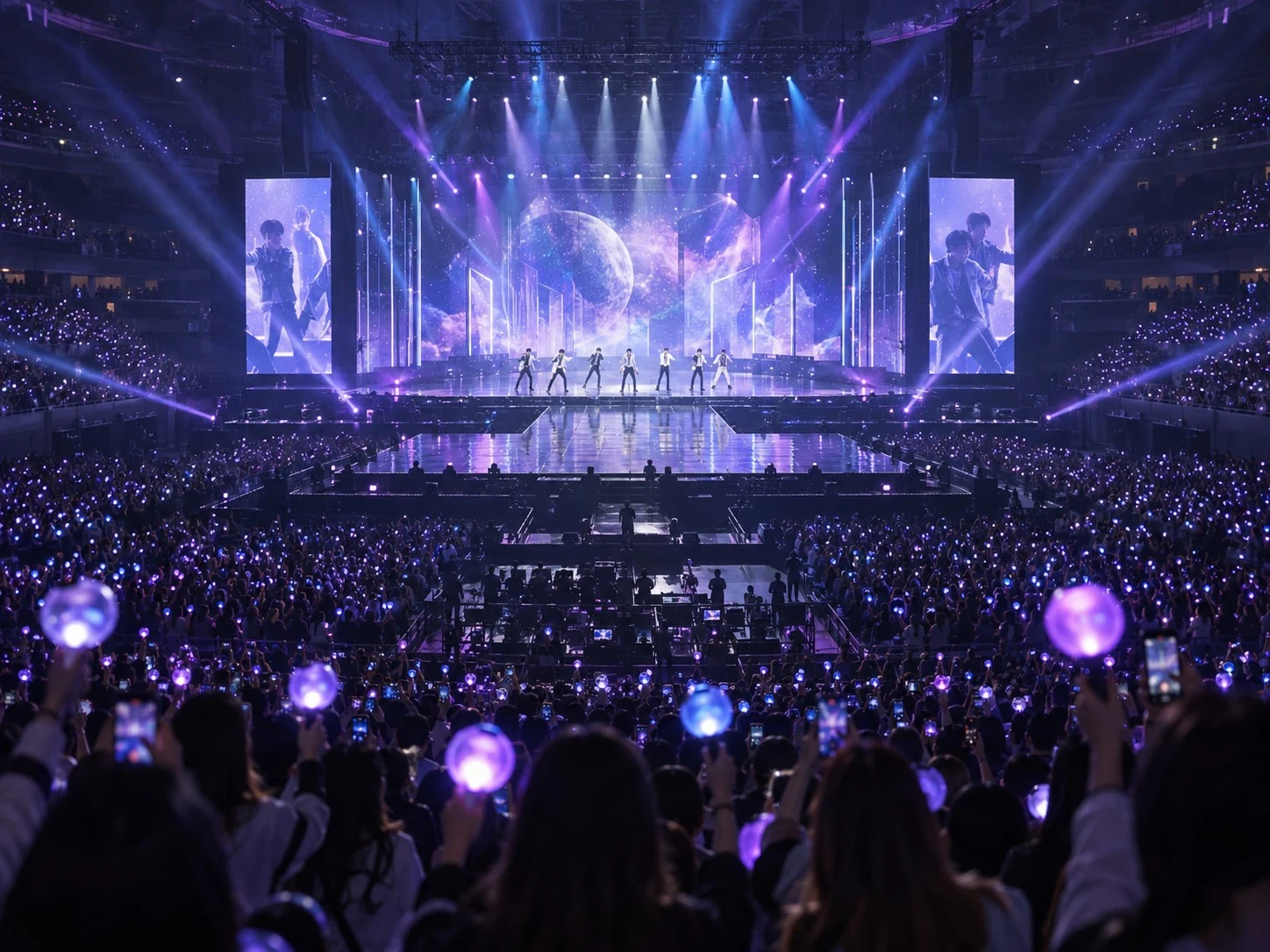
From BTS to BLACKPINK — the most common Korean words and phrases used by your favourite K-Pop artists, with pronunciation guides.
A clear starting point, examples you can adapt, and practice with explanations. Learn the language behind everyday Korean life.
READ · UNDERSTAND · USE
A first-week plan and four practical companions connect the lessons to real situations. Each guide includes worked examples and explained answers.
Learn the 24 basic Hangul letters, combine them into syllable blocks, and practise reading real words. Sound changes and fluent reading develop with further practice.
Learn Hangul Now →Learn Korean through the music you love — essential lyric vocabulary, fan chants, and idol slang, each with a tap-to-hear pronunciation button.
Read →Pick up everyday Korean from your favourite dramas — vocabulary sorted by genre, iconic phrases, and the speech levels behind each scene.
Read →From 김치 (kimchi) to 삼겹살 (samgyeopsal) — explore the rich vocabulary of Korean cuisine with pronunciation and cultural context.
Read →Reading is only half of literacy. These two free, interactive tools train the other half — forming each letter by hand in the correct stroke order, and typing Korean on a real keyboard, right here in your browser with nothing to install.
Watch every Hangul letter drawn stroke by stroke in the correct order, then trace it yourself with a mouse or your finger — the lesson checks your direction, shape, and coverage as you go. All 24 letters, building up to full syllable blocks like 값 and 닭, with a free-practice pad for any character.
Start writing →Learn the standard 두벌식 (Dubeolsik) keyboard on a full on-screen layout, then build speed with jamo, syllable, and word games scored in 타/min. It works even if you have no Korean keyboard installed — tap the on-screen keys or use your own, no OS setup required.
Start typing →Whether you are just starting or aiming for fluency, we have a clear roadmap to take you there step by step.
Language is the gateway — immerse yourself in Korean pop culture, food, and beauty to supercharge your learning.
AI-generated illustration
From BTS to BLACKPINK — the most common Korean words and phrases used by your favourite K-Pop artists, with pronunciation guides.

AI-generated illustration
Korean dramas are packed with emotional vocabulary. Learn how characters express joy, sadness, anger, and love in authentic Korean.
AI-generated illustration
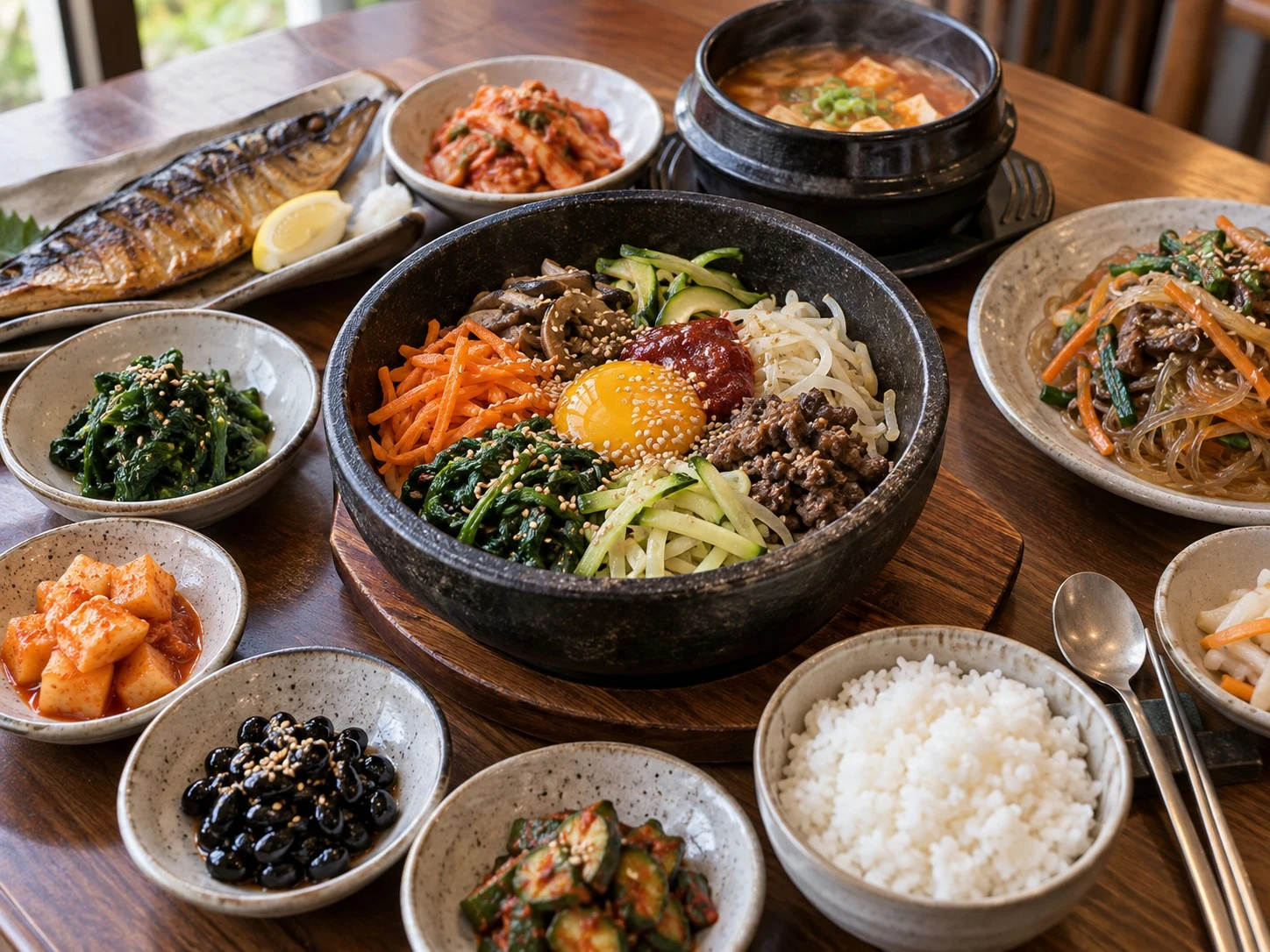
Essential phrases for ordering food, asking for the bill, and navigating a Korean restaurant menu with confidence.

AI-generated illustration
Explore the world of K-Beauty with essential vocabulary for skincare routines, cosmetics, and Korean beauty trends.
Learn the language of every destination. From bustling Seoul to the serene shores of Jeju — your AI travel guide is ready.

AI-generated illustration
South Korea's dazzling capital — from the ancient palaces of Gyeongbokgung to the neon streets of Gangnam and Hongdae.
Explore →
AI-generated illustration
Korea's vibrant port city with stunning beaches, fresh seafood markets, and a unique dialect worth discovering.
Explore →
AI-generated illustration
Korea's paradise island — volcanic landscapes, pristine beaches, tangerine groves, and the famous haenyeo diving culture.
Explore →10 progressive levels · multiple choice · covers Hangul, Grammar & Vocabulary
Korean rewards a specific order. Skip a step and later ones feel impossible; follow it and each one makes the next easier. This is the exact sequence Korean School is built around — and every stage below is a free lesson you can start today.
Most learners are surprised that the alphabet is the easy part. 한글 (Hangul) was designed in 1443 to be learned quickly, and it shows: 14 basic consonants and 10 basic vowels, each with a shape that hints at how you say it. Once you can read 한글 — usually within a day or two of focused practice — Korean stops being a wall of symbols and becomes a language you can sound out. Nothing else you do here depends on memorising the alphabet the slow way, so we put it first and make it stick.
Start the Hangul lesson →Korean letters are not written in a line like English; they stack into square syllable blocks, so ㅎ + ㅏ + ㄴ becomes 한. Understanding this one rule turns two dozen letters into thousands of readable words. Our syllable-block lessons include an interactive builder that composes real Hangul as you choose each part, so the pattern becomes automatic instead of theoretical.
Try the syllable builder →Korean sounds are consistent, which is good news, but a few — the tense consonants, the difference between ㅓ and ㅗ, and the way final consonants change before the next word — trip up nearly everyone. We cover these while your habits are still forming, with listen-and-repeat audio on every example, because unlearning a mispronunciation later is far harder than learning it right the first time.
Practise pronunciation →Korean grammar is genuinely different from English: the verb comes last (Subject–Object–Verb), particles mark who does what, and the ending of a verb carries politeness, tense, and mood all at once. That sounds daunting and is actually freeing — word order is flexible because the particles do the work. Our grammar track teaches the handful of high-frequency patterns that unlock everyday speech, with real example sentences rather than tables to memorise.
Open the grammar track →With reading and grammar in place, vocabulary is where fluency actually accumulates. We organise hundreds of words into themed sets — food, travel, emotions, business, shopping — each with audio, example sentences, and flashcards that track what you have learned. Learning words inside a topic you care about is the difference between remembering ten and remembering a hundred.
Browse the word bank →The last step is the one most courses never reach: using the language for something you enjoy. This is where the K-Culture guides come in. A K-Pop lyric, a drama scene, a food order — each is a low-pressure, high-motivation way to hear real Korean at natural speed and try producing your own. You do not wait until you are "ready" to engage with Korean culture; engaging with it is how you get ready.
Explore K-Culture →Korean has gone from a niche language to one of the most-studied in the world in barely a decade, and the reasons are practical as well as cultural.
The Korean Wave — 한류 (Hallyu) — put K-Pop, K-Drama, and Korean film onto phones and screens everywhere. Understanding even a little Korean transforms that from something you watch with subtitles into something you actually follow: the joke that does not translate, the honorific that signals respect, the lyric that means more than the caption said.
Korea is welcoming to visitors, but a traveller who can read 한글, order food, and ask for directions has a completely different trip — one that reaches the neighbourhood restaurant, the local market, and the conversation that no guidebook prints.
Korea is a global centre for technology, manufacturing, beauty, and entertainment. Korean-language ability is a real advantage for business, and proficiency is the gateway to university study and many jobs in Korea. Our advanced tracks — business Korean, essay writing, and classical Korean — are built with those goals in mind.
There is a reason linguists praise 한글: it is one of the most logical scripts ever created, and being able to read it after an afternoon is a genuinely motivating first win. Few languages give back so much, so fast, for so little.
Korean School is three sections that reinforce each other. You can start anywhere, but they are designed to be used together.
Read complete lessons from the alphabet to advanced writing, with explanations, examples, audio, and practice questions together on one page. Browse vocabulary and save words to your flashcards. Hangul · grammar · vocabulary
Deep-dive guides into K-Pop, K-Drama, Korean film, food, beauty, fashion, gaming, sports, and everyday Korean life. These are not trivia pages: each one teaches the vocabulary, phrases, and cultural context you need to genuinely engage — the slang idols use, the speech levels behind a drama scene, the words to order at a 삼겹살 restaurant. Explore the full K-Culture hub.
City guides, itineraries, and a trip planner that pair every destination with the language you will actually use there. From the palaces of Seoul to the beaches of Busan and the volcanic landscapes of Jeju, the Travel guides turn "someday" into a plan — with the phrases to make it smooth when you arrive.
Most people can read the Korean alphabet in a single focused afternoon and feel comfortable within a week of light practice. 한글 is phonetic and consistent, so once you know the letters you can sound out almost any word — long before you understand what it means. That early win is exactly why we start here.
It is different rather than simply hard. The grammar (verb-final word order, particles, speech levels) takes adjustment, but the alphabet is easy, the pronunciation is regular, and there are no tones to worry about as in Chinese or Vietnamese. Learners who follow a sensible order — alphabet, then sound, then patterns — usually find it far more approachable than its reputation suggests.
No. Modern Korean is written almost entirely in 한글, and you can reach a high level of reading, speaking, and comprehension without studying Hanja at all. A little Hanja awareness can help you see how words are built later on, but it is optional and never a starting requirement.
Yes — every lesson, guide, quiz, and tool on this site is free to use, with no account required and no paywall. The site is supported by unobtrusive advertising, not subscriptions, so the content stays open to learners everywhere.
Apps are good at drilling isolated words; they rarely explain why Korean works the way it does, and they seldom connect the language to the culture that makes people want to learn it. Korean School combines structured lessons with genuine cultural context and real-world travel language, so you understand what you are saying and have somewhere real to use it. And there is no streak-shaming — your progress is saved, but the pace is yours.
If you are brand new, start with Hangul and do not skip ahead until you can read the letters — everything else is easier once you can. From there, work through syllable blocks and pronunciation, then move into grammar and vocabulary. Once you can read comfortably, start dipping into the K-Culture guides for listening practice and motivation. The quiz is there whenever you want to check what has stuck.
Choose a topic, read its explanation, then practise with the examples and questions. Return to difficult material regularly and study at a pace you can sustain.