
Themed Travel in Korea
Travel by passion — whether you're a food lover, festival-hopper, history buff, or outdoor adventurer. Korea has a dedicated route for every type of traveller.
1 Food Tour · 음식 여행
Korean cuisine is one of the world's greatest — and the best way to experience it is to eat like a local. From dawn market breakfasts to midnight 포장마차 (street stalls), every meal is an event.
Meals & Street Food Vocabulary · 식사 어휘
| Korean | Romanisation | English |
|---|---|---|
| 맛집 | Matjip | Famous / delicious restaurant (literally "taste place") |
| 포장마차 | Pojangmacha | Covered street food stall — tent-style, open late |
| 야시장 | Yasijang | Night market |
| 시장 | Sijang | Traditional market |
| 한식 | Hansik | Korean cuisine |
| 분식 | Bunsik | Snack food — tteokbokki, kimbap, ramen |
| 반찬 | Banchan | Side dishes served free with every Korean meal |
| 리필 | Ripil | Refill (banchan is always free refill) |
Best Food Cities · 음식 도시
서울
전주
부산
인천
제주
수원
Seasonal Foods · 계절 음식
Spring · 봄
Summer · 여름
Autumn · 가을
Winter · 겨울
Food Tour Korean Phrases 음식 투어 표현
이 집 유명해요? (I jip yumyeonghaeyo?) — Is this place famous? · 추천 메뉴가 뭐예요? (Chucheon menyuga mwoyeyo?) — What's the recommended dish? · 덜 맵게 해주세요 (Deol maepge haejuseyo) — Please make it less spicy · 맛있어요! (Massisseoyo!) — It's delicious!
2 Events & Festivals · 이벤트
Korea's festival calendar is packed year-round. Some of the world's most extraordinary cultural events happen here — from mud wrestling to lantern-lit rivers, cherry blossom seasons, and ancestral ceremonies unchanged for 500 years.
Annual Festival Calendar · 연간 축제 달력
January
February
March–April
May
June–July
August
September
October
November
December
Major Festivals in Detail · 주요 축제
진해 군항제
Korea's largest cherry blossom festival — 360,000 trees bloom across the naval city of Jinhae. One of Asia's most spectacular spring events. Free entry, train access from Masan.
연등회
Thousands of glowing lanterns parade through Seoul's Jongno for Buddha's Birthday. UNESCO Intangible Cultural Heritage since 2020. The lantern parade and folk performances are free.
보령 머드 축제
Korea's most famous festival for international visitors — wallow in the famous Boryeong grey mud at Daecheon Beach. K-pop concerts, mud wrestling, and waterslides. Runs 10 days in mid-July.
추석
Korea's most important traditional holiday — a 3-day harvest celebration with ancestral rites, 송편 (rice cake) making, and traditional games. Many restaurants close; families gather. Gyeongbokgung is free during Chuseok.
부산국제영화제
Asia's premier film festival — held for 10 days at Haeundae and BIFF Square. Korean films, world premieres, and K-star sightings. Tickets available online from late September.
 AI-generated learning illustration
단풍 시즌
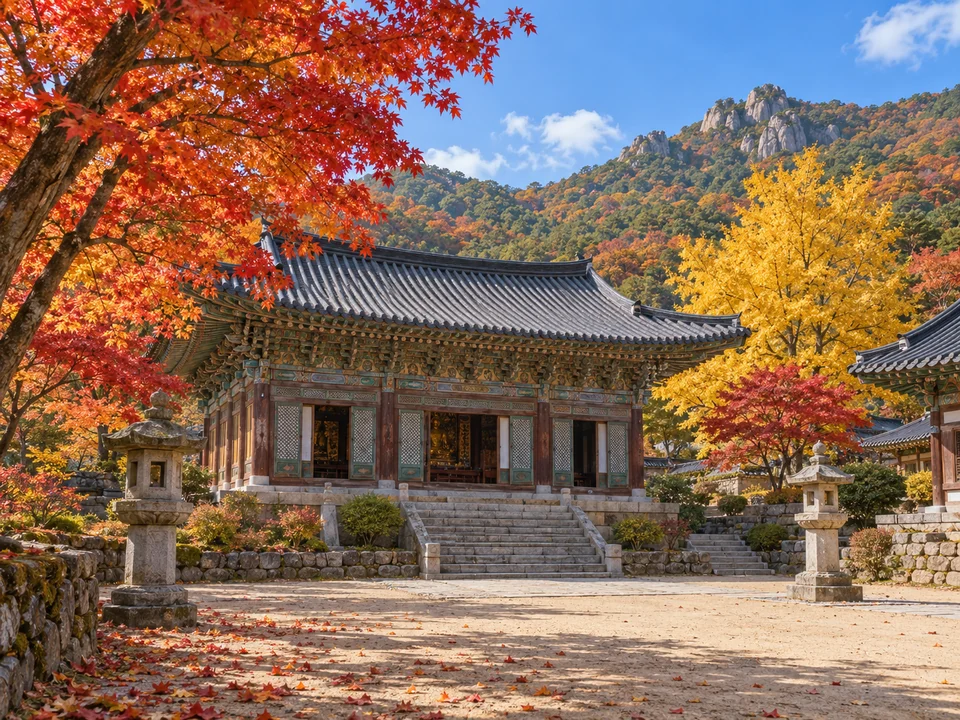
Korea's mountains explode in crimson and gold. Best spots: Seoraksan (설악산, late Oct), Naejangsan (내장산, early Nov), Gyeryongsan (계룡산, mid Nov). Book accommodation months ahead.
Festival Korean Phrases 축제 표현
축제가 언제예요? (Chukjega eonjeyeyo?) — When is the festival? · 입장료가 있어요? (Ipjangnyoga isseoyo?) — Is there an entry fee? · 사진 같이 찍어요! (Sajin gachi jjikeoyo!) — Let's take a photo together! · 정말 신나요! (Jeongmal sinnayo!) — This is really exciting!
3 Sightseeing · 관광
UNESCO lists 17 World Heritage properties in the Republic of Korea as checked on 4 October 2026: 15 cultural and two natural. World Heritage properties and intangible cultural heritage are separate lists. Choose a place below, then check its operator’s access information before planning a visit. Reference · whc.unesco.org
UNESCO World Heritage Sites · 유네스코 세계유산
 AI-generated learning illustration
불국사 & 석굴암
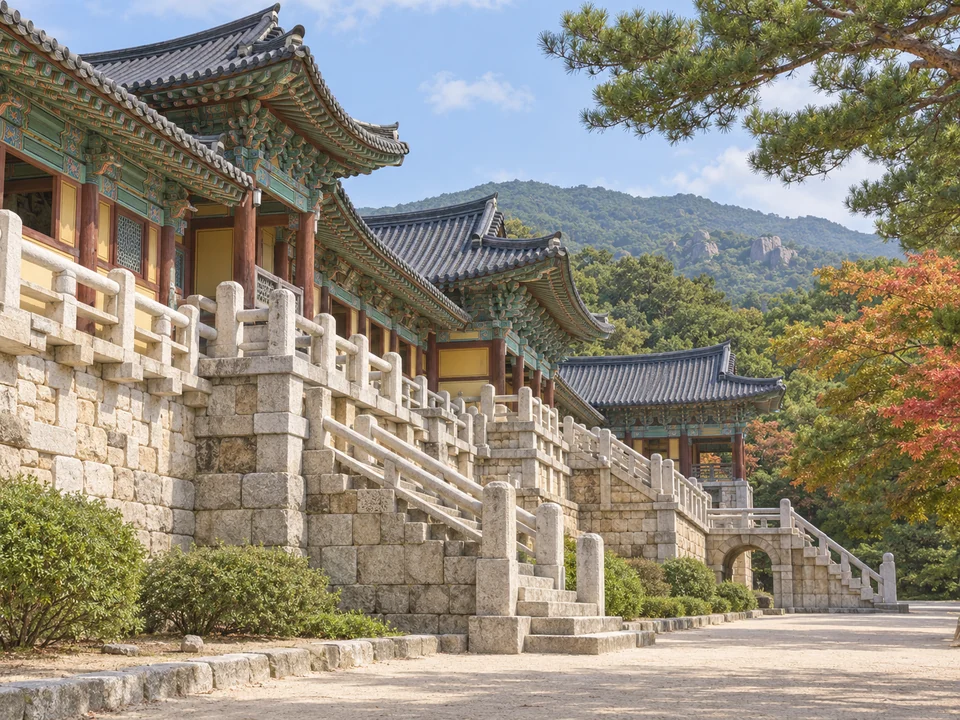
Two masterpieces of 8th-century Buddhist architecture. The stone pagodas of Bulguksa and the serene granite Buddha of Seokguram are considered Korea's finest artistic achievements.
 AI-generated learning illustration
화성
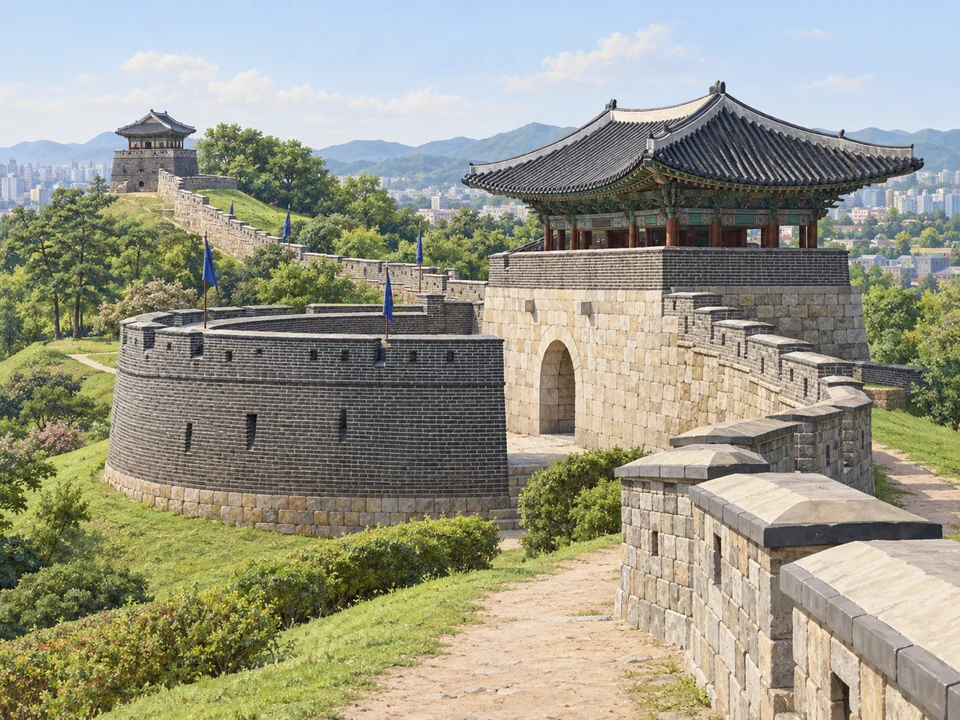
A 5.7 km fortress wall incorporating scientific military innovations of the 18th century. Built in just 28 months (1794–1796) by King Jeongjo. Walkable in 2 hours with spectacular views.
 AI-generated learning illustration
창덕궁 후원
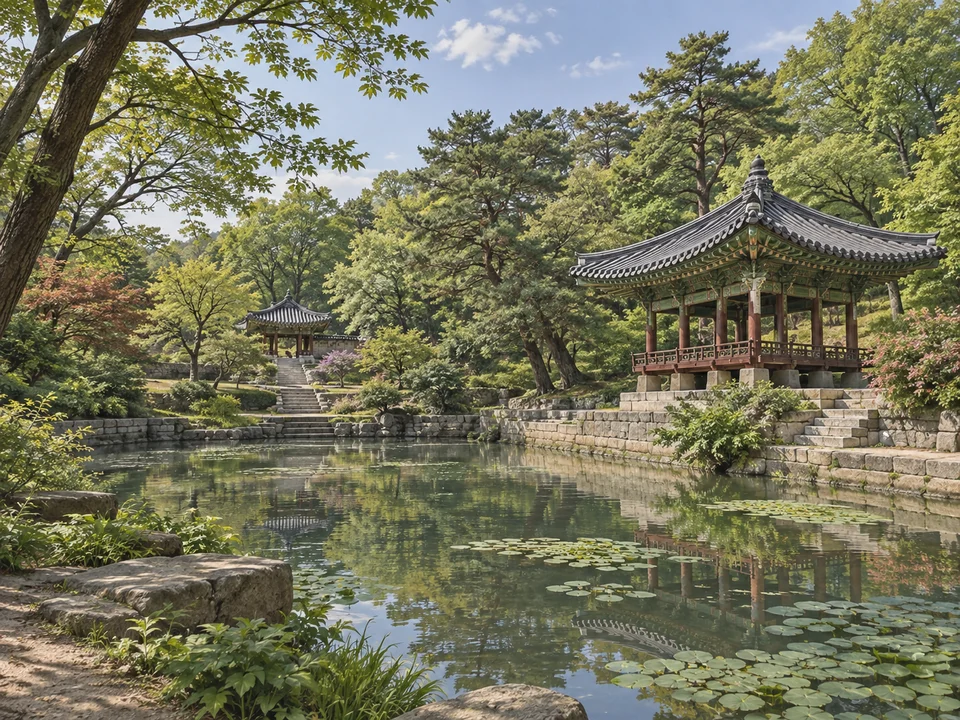
A Joseon palace built in 1405 with a stunning 300-year-old landscaped garden. The Secret Garden (후원) tour is guided and limited — book ahead. Best in autumn when the foliage is golden.
 AI-generated learning illustration
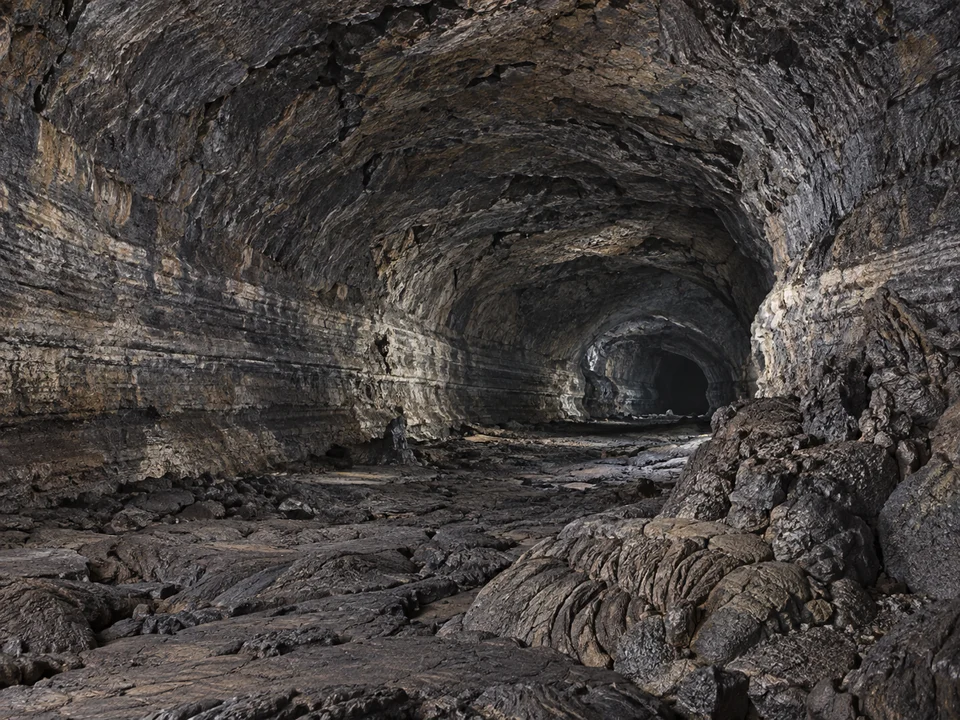
제주 화산섬과 용암동굴
Jeju Volcanic Island and Lava Tubes is one of Korea’s two natural World Heritage properties; Getbol, Korean Tidal Flats is the other. A listed property can include several component areas. UNESCO status does not mean every cave or trail is open to visitors. Reference · whc.unesco.org
조선 왕릉
40 royal tombs spread across the Seoul metropolitan area — serene forested grounds where Korea's kings rest. Seleon (선릉), Heonneung (헌릉), and Donggu Neung (동구릉) are the most accessible.
하회마을
A living Joseon-era village where descendants of the Ryu clan still reside in 600-year-old thatched and tile-roofed homes. Traditional mask dances (하회탈) performed on weekends.
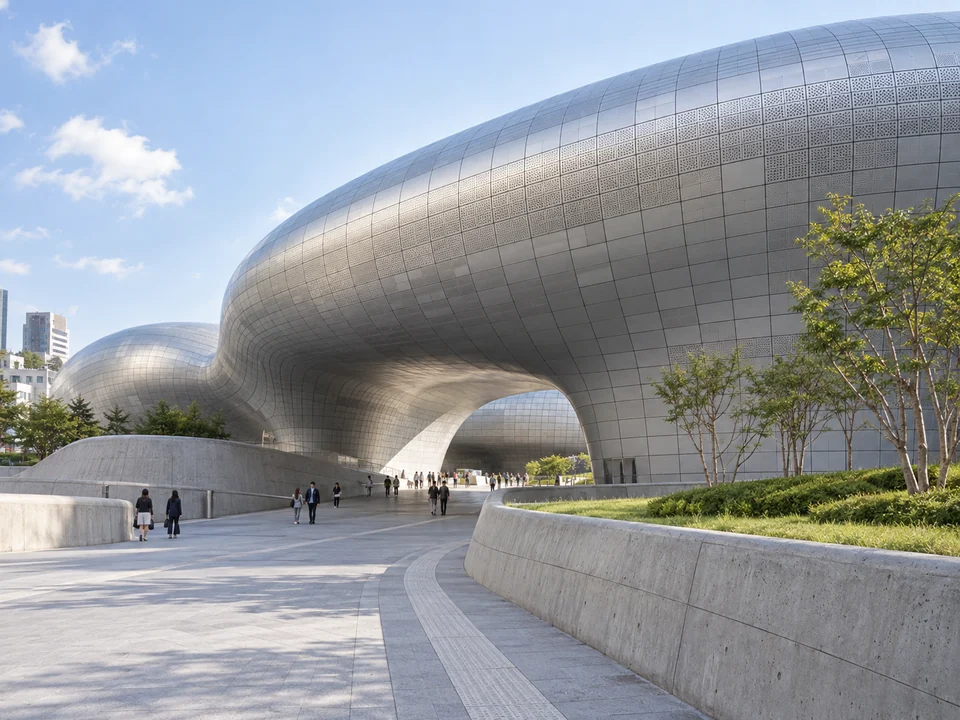
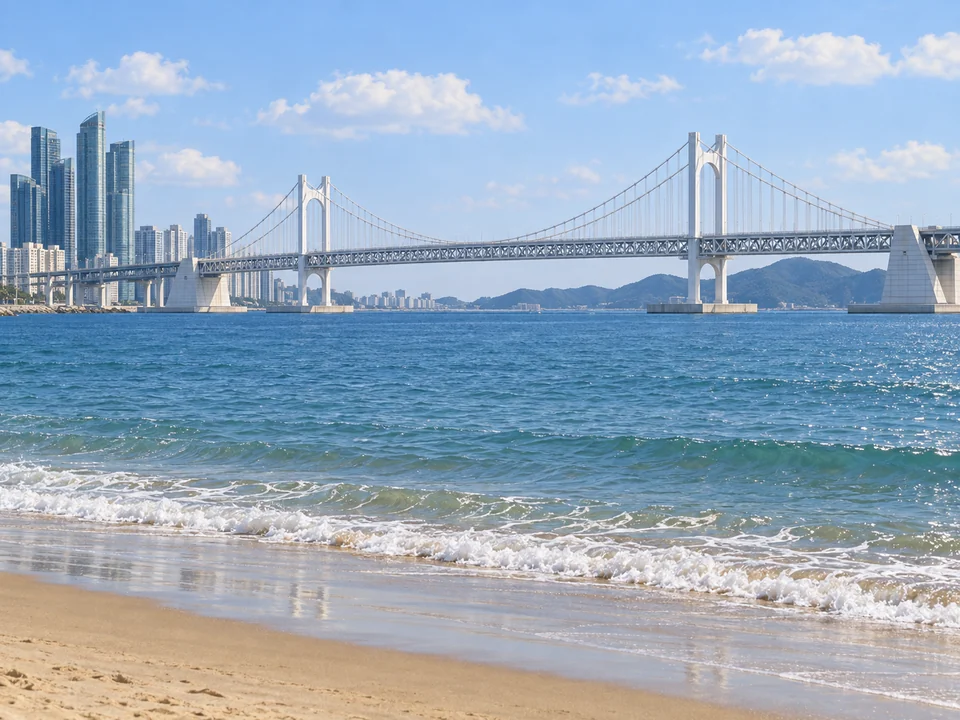
Must-See Modern Architecture · 현대 건축
 AI-generated learning illustration
DDP 동대문
아모레퍼시픽
 AI-generated learning illustration
광안대교
롯데월드타워
반포 달빛무지개분수
Sightseeing Phrases · 관광 표현
| Korean | Romanisation | English |
|---|---|---|
| 이곳이 어디예요? | Igosi eodiyeyo? | What place is this? |
| 가이드 투어 있어요? | Gaideu tuyeo isseoyo? | Is there a guided tour? |
| 몇 시에 문 닫아요? | Myeot-sie mun dadayo? | What time does it close? |
| 화장실이 어디예요? | Hwajangsili eodiyeyo? | Where is the restroom? |
| 오디오 가이드 빌릴 수 있어요? | Odio gaideu billil su isseoyo? | Can I borrow an audio guide? |
4 Cross-Country · 장거리
Korea's terrain is 70% mountains and laced with rivers and coastline — making it a paradise for walkers, cyclists, and hikers. The government has invested billions in long-distance trails and dedicated bicycle paths.
Walking Routes · 도보 여행
Walk the full circumference of Seoul's 600-year-old Joseon city wall — from Gyeongbokgung through Bugaksan mountain, down to Heunginjimun gate, around Namsan, and back. Four sections can be walked separately. The Bugaksan section offers the best Seoul panoramas. Free entry.
광화문
북악산
낙산
흥인지문
남산
Korea's most famous long-distance trail — 26 sections circling all of Jeju Island through volcanic coastline, bamboo forests, haenyeo villages, and 오름 craters. Each section is 10–20 km and can be done independently. Section 7 (서귀포 오름 코스) is the most dramatic. Olle Guide offices stamp your passport at each start.
Olle Phrase 올레 표현
올레 코스 몇 번이 좋아요? (Olle koseu myeot beoni joayo?) — Which Olle route is best?
Bicycle Routes · 자전거 여행
Korea's ultimate cycling achievement — a dedicated, paved bicycle path from Incheon on the Yellow Sea all the way to Busan on the South Sea, following the Han, Nakdong, Geum, and Yeongsan rivers. Stamping stations at each major waypoint. Completing the full route earns an official certificate and medal from the Korea Tourism Organization.
인천
서울
충주호
상주
부산
Seoul's Han River has 40 km of dedicated bike paths on both banks — flat, paved, and fully separated from traffic. Rent a bike at any of the 10+ riverside parks (₩3,000/hr). The stretch from Yeouido to Ttukseom is most scenic with sunset views of the city bridges.
Mountain Hikes · 등산
 AI-generated learning illustration
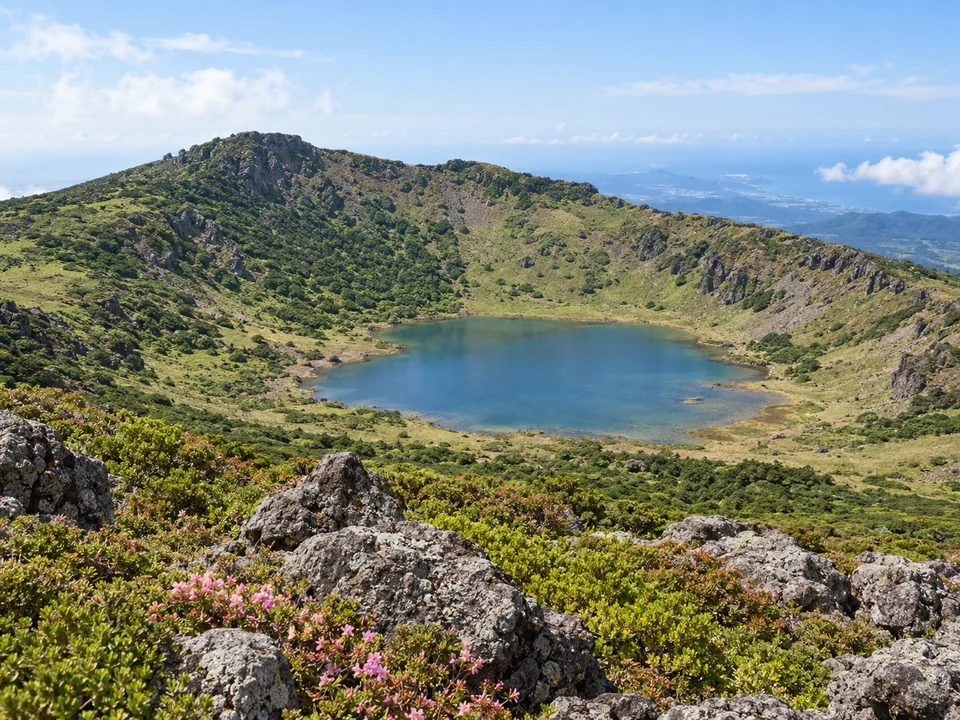
한라산
Korea's highest peak. Seongpanak trail (13.5 km, 6–8 hrs round trip) reaches the crater lake 백록담. Eorimok trail (8.6 km, 4–5 hrs) is shorter. Summit closes at 12:00 PM — start early.
설악산
Korea's most dramatic mountain — jagged granite peaks, waterfalls, and the Ulsanbawi rock formation (873 stone steps). Autumn foliage is extraordinary. Biseondae Valley trail is superb for day hikers.
도봉산
Only 40 minutes by subway from central Seoul. Jagged granite peaks visible from much of the city. The Uiam trail leads to Jaunbong peak (740m) with stunning views over the entire Seoul basin.
지리산
Korea's first national park (designated 1967) and longest ridge walk — 25 km connecting 10 peaks along the Baekdu-daegan spine. The two-day Cheonwangbong summit hike (1,915m) is a rite of passage for Korean hikers.
Hiking Phrases · 등산 표현
| Korean | Romanisation | English |
|---|---|---|
| 등산로가 어디예요? | Deungsanro ga eodiyeyo? | Where is the hiking trail? |
| 정상까지 얼마나 걸려요? | Jeongsang kkaji eolmana geollyeoyo? | How long to the summit? |
| 이 길이 어렵나요? | I gili eoryeomnayo? | Is this trail difficult? |
| 조심하세요! | Josimhaseyo! | Be careful! |
| 파이팅! | Paiting! | You can do it! / Keep going! |
Hiking Culture in Korea 등산 문화
Check each national park’s official notices for route access, reservations, opening times and any charges. Do not assume every trail offers food, English signs or the same entry arrangements. Reference · www.knps.or.kr (Korean)